


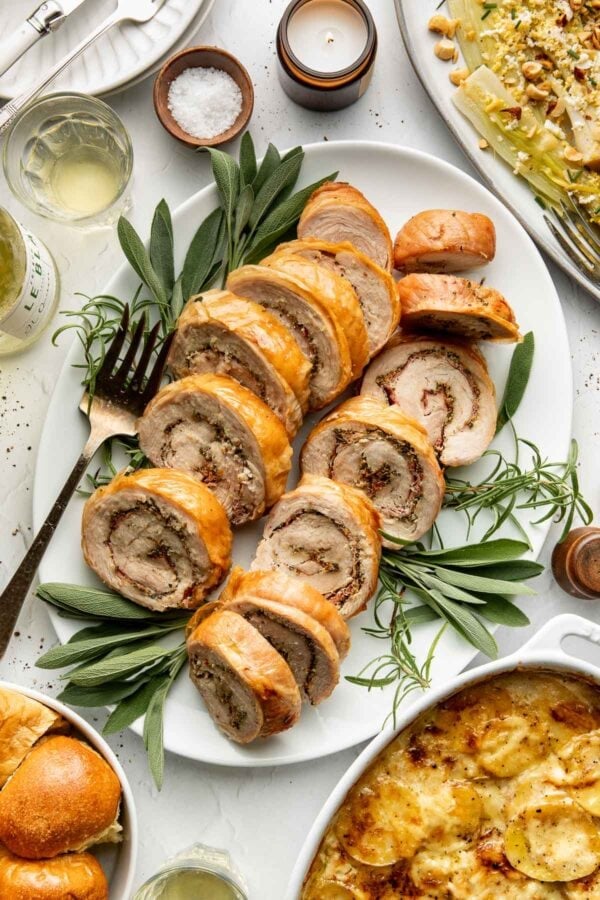
Crackling Skin, Juicy Slices, & a Spiral of Herbs in Every Bite
Let’s be honest: turkey breast has a reputation problem. It’s usually the dry, polite slice nobody fights over. This turkey breast roulade is the best fix, and it might just become the most-requested thing on your holiday table.
The idea comes from porchetta, Italy’s legendary rolled pork roast. It’s famous for its garlicky, fennel-heavy filling and blistered, crackling skin. I took that same playbook and applied to turkey. The result is a showstopping centerpiece that slices into gorgeous pinwheels, feed a crowd without a 20-pound bird, and frees up your oven when it matters most.
It’s elegant enough for Thanksgiving or Christmas, and it’s a perfect fit for smaller gatherings, Friendsgiving, or anyone who’d rather skip wrestling a whole bird. 😉

You’ll want a boneless, skin-on turkey breast with the skin intact in one piece. The skin is non-negotiable here; it’s what becomes the crackling. Most butchers will happily debone a breast for you, and some will even butterfly it. (Though we’ve included step-by-step photos just in case!)
What Makes This Turkey “Porchetta-Style”?
Traditional porchetta is a deboned pig (or a pork belly wrapped around a loin) that’s seasoned heavily, rolled, and slow-roasted until the skin turns into crackling. Porchetta turkey keeps the signature elements and swaps in turkey breast.
Ready? You Got This.
This recipe is split across two days of hands-on time with a long, hands-off rest in between. Day 1 is all about prep: about an hour of butterflying, rolling, and tying. Day 3 is just roasting and slicing. Here’s how it comes together and why each step matters.
Day 1: Butterfly, Season, Roll, & Tie
Take your time with the knife; small, controlled cuts are better than one confident slice that goes too far or cuts a whole.
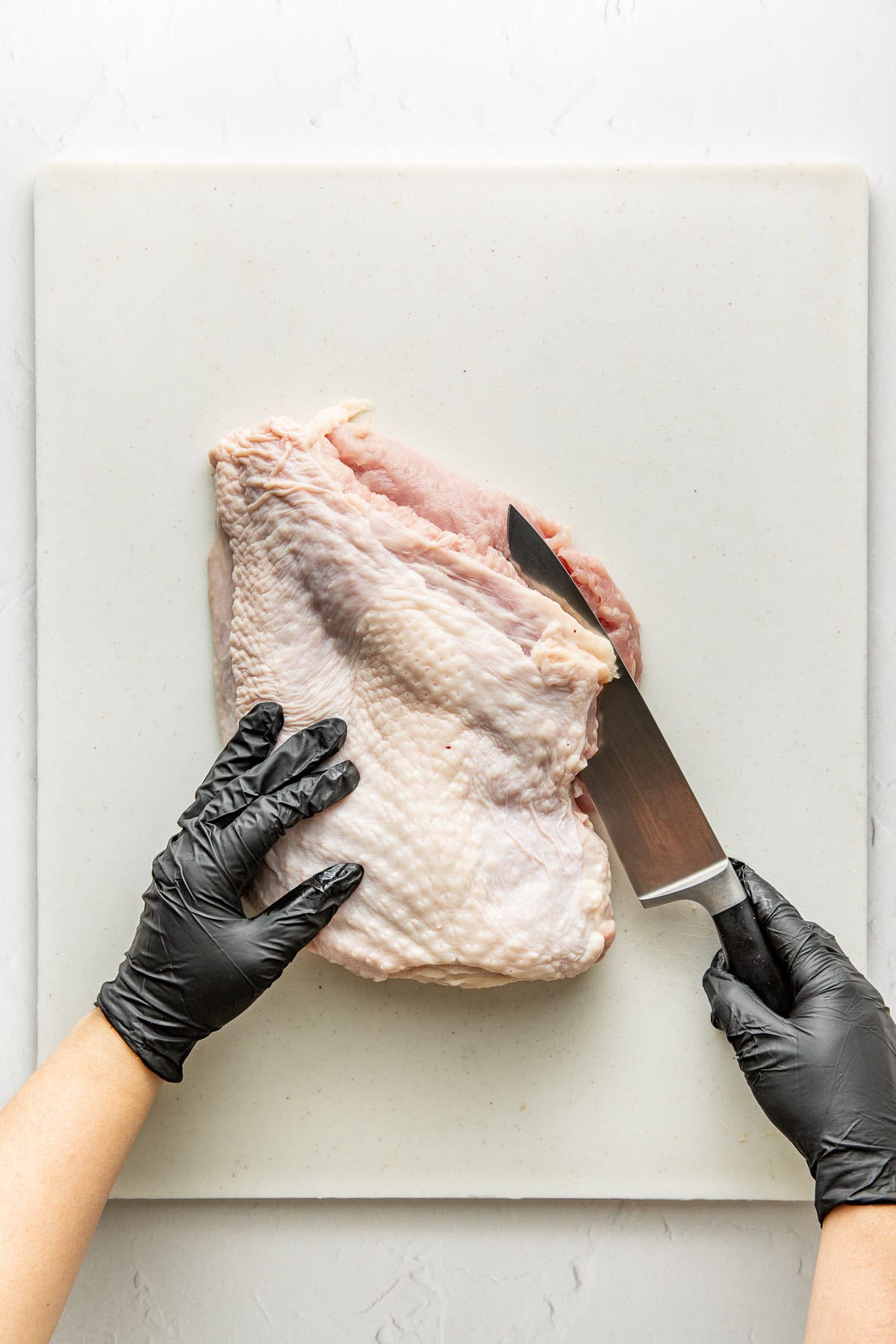
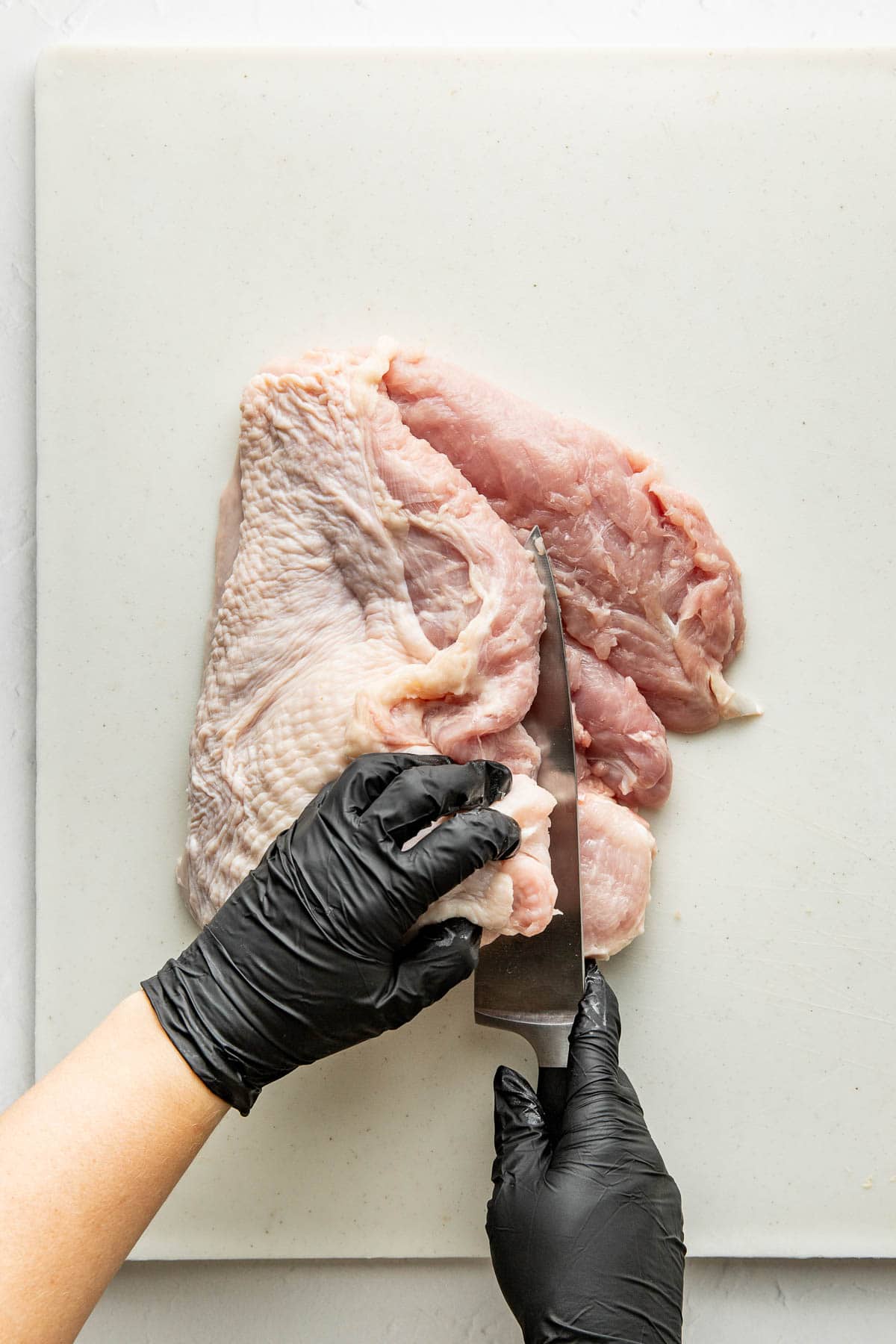
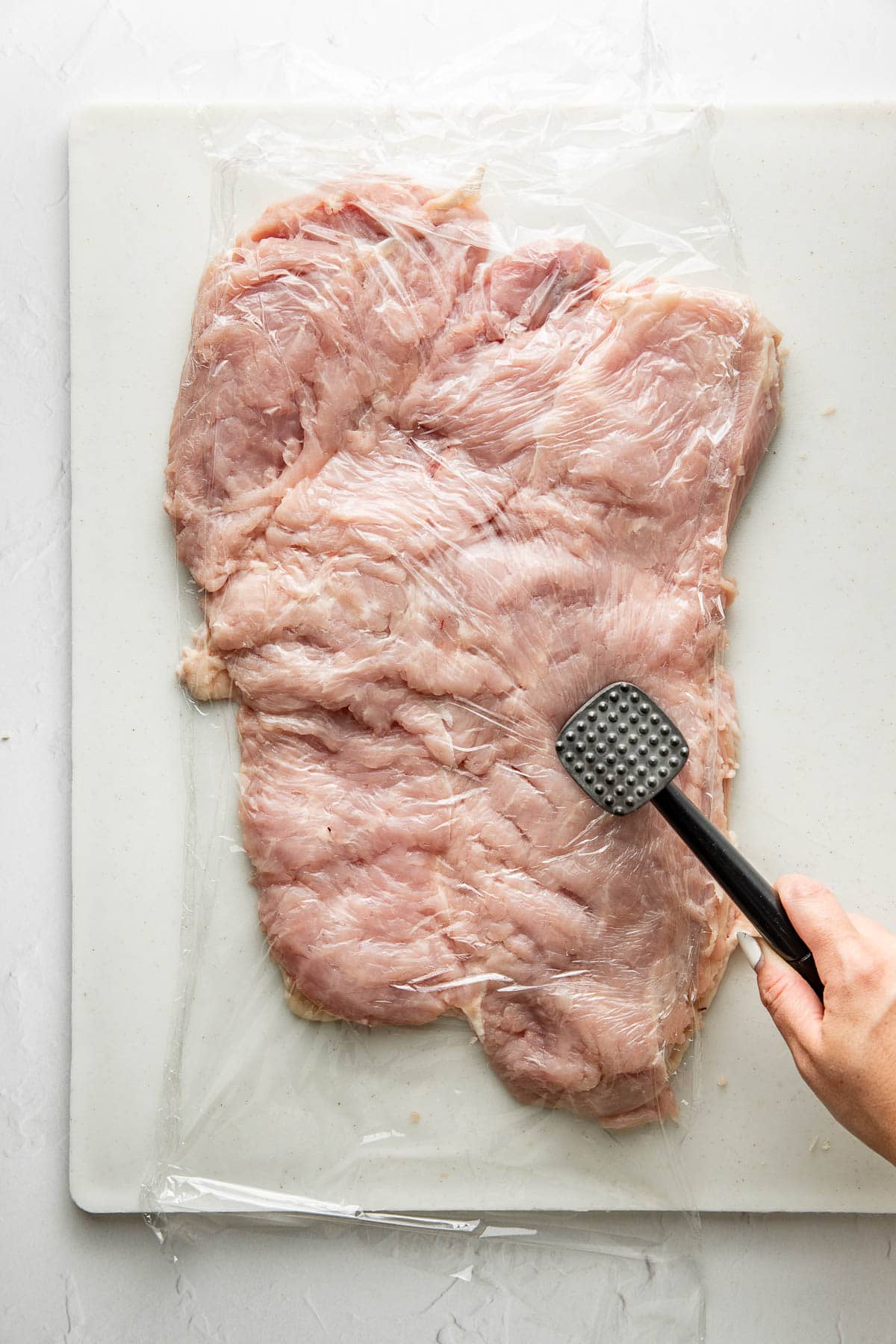
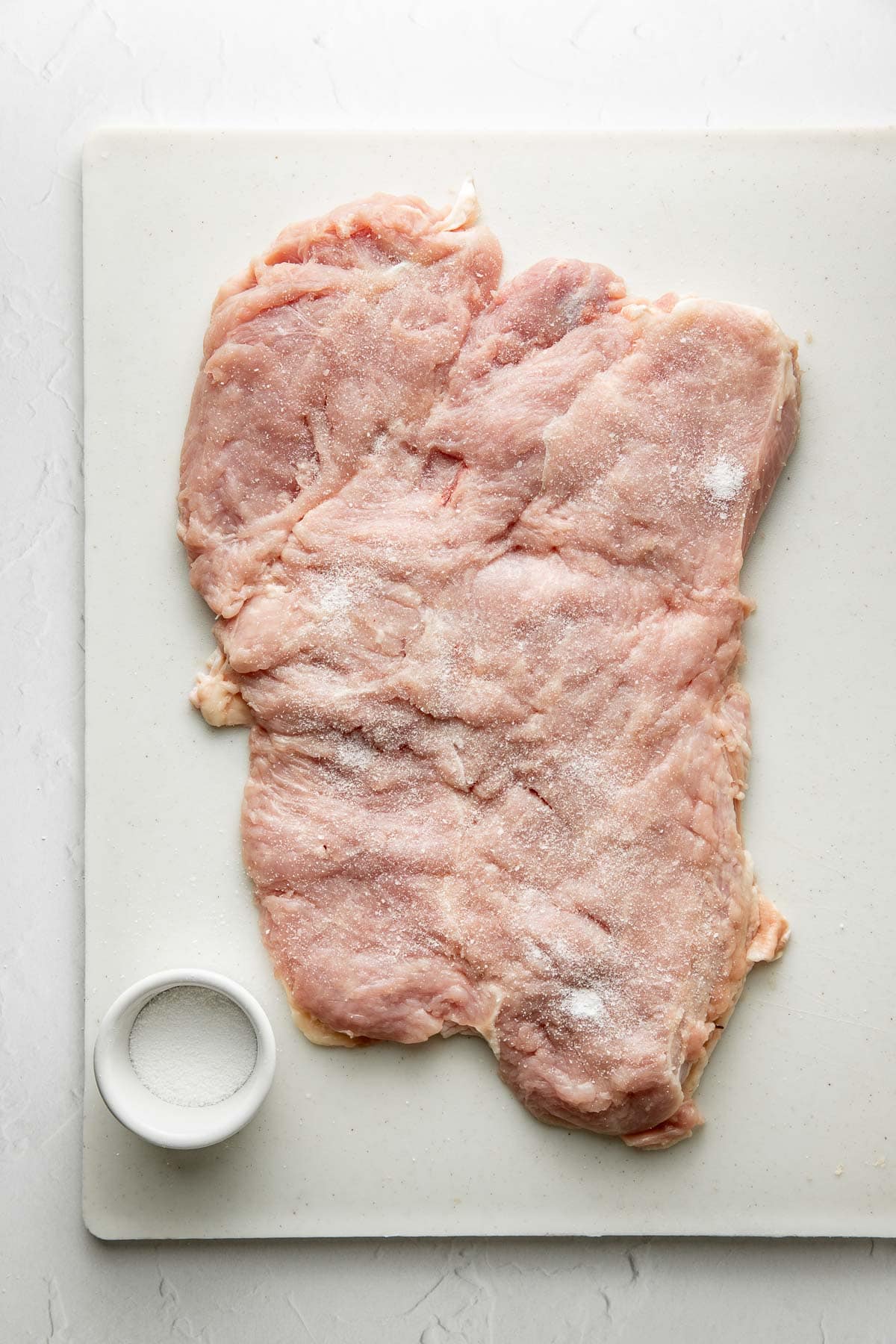
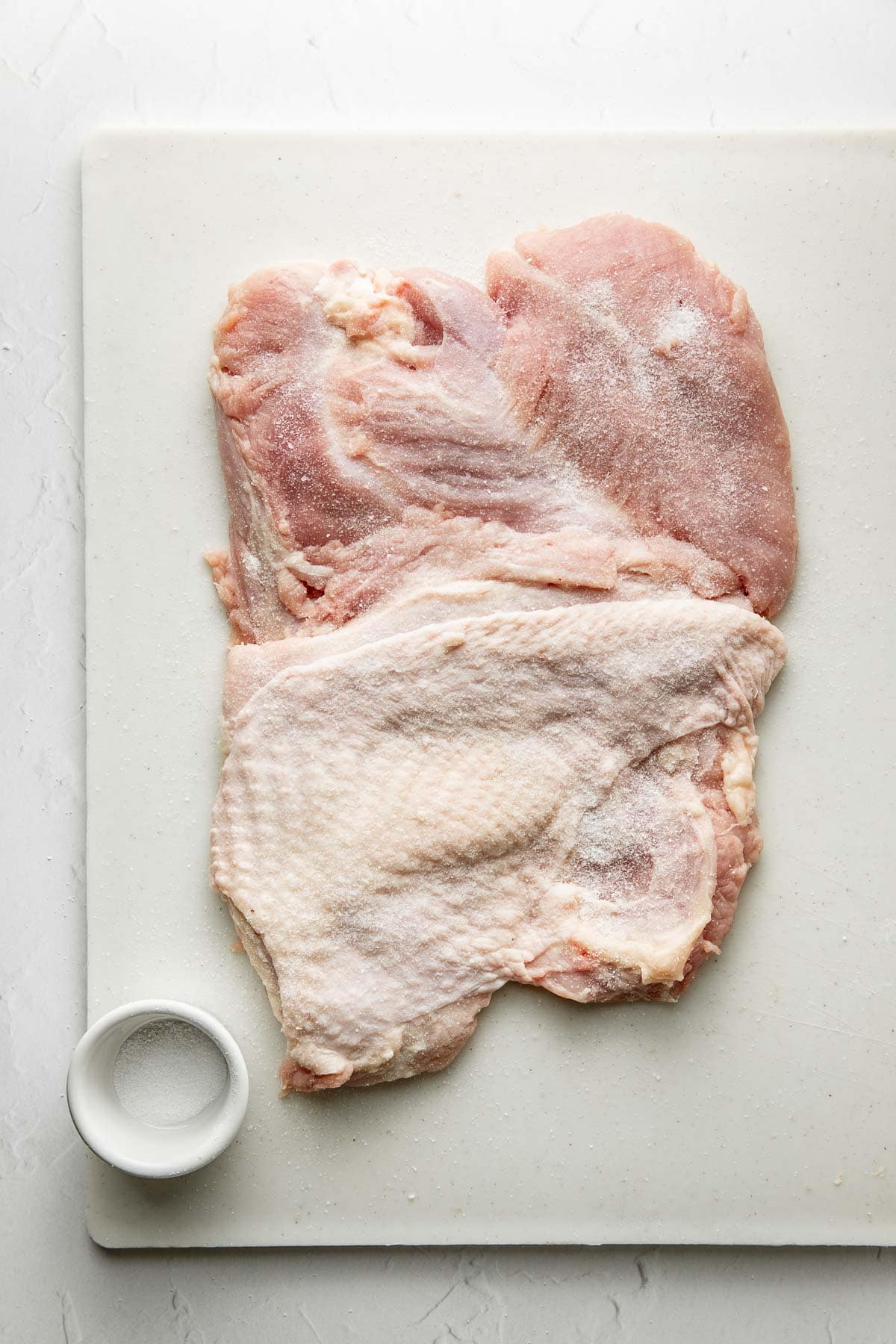
The salt has two full days to work itself into the meat. Do not substitute baking powder with baking soda! It’s roughly 4x stronger and will leave the skin tasting metallic.
Bloom the Paste
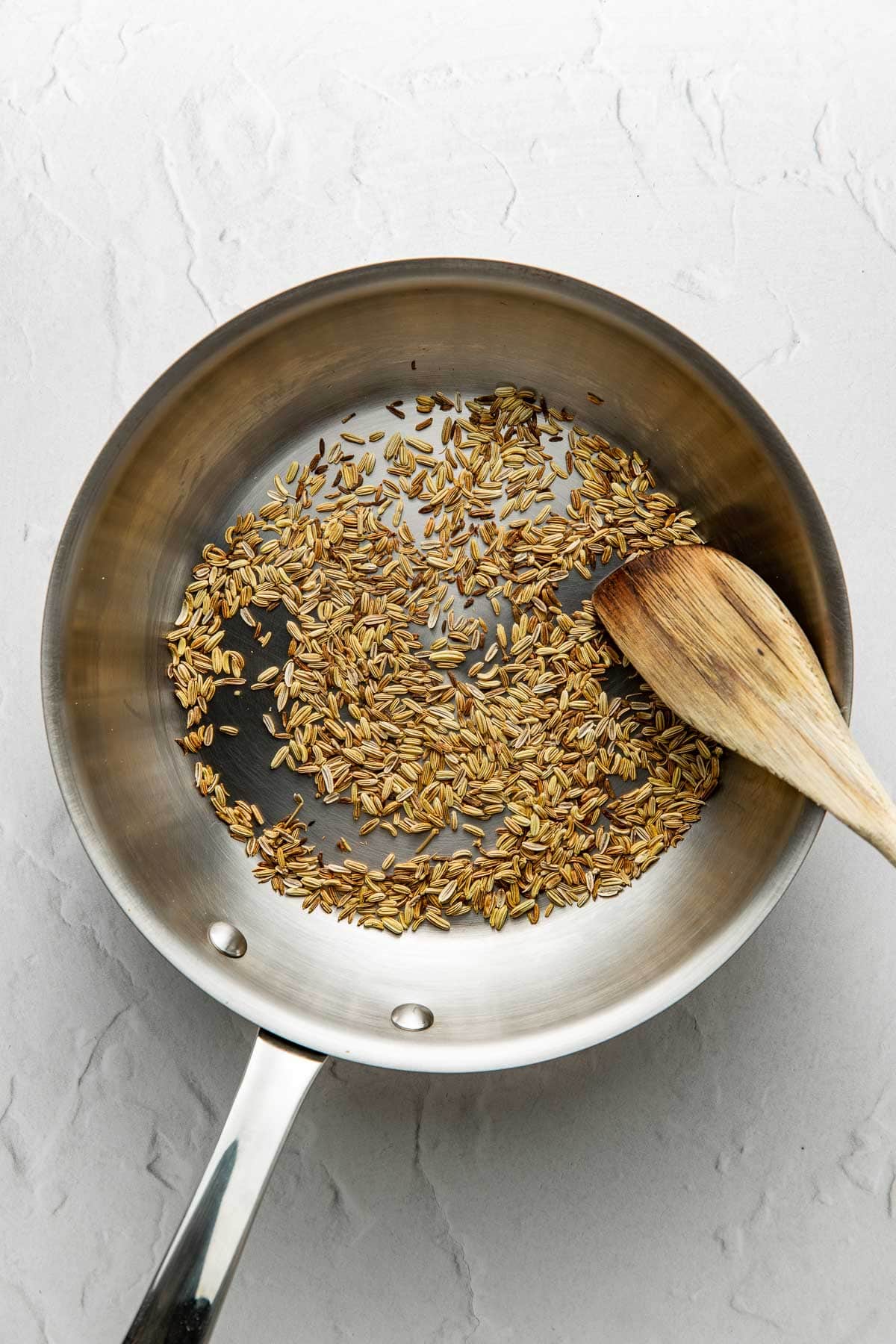
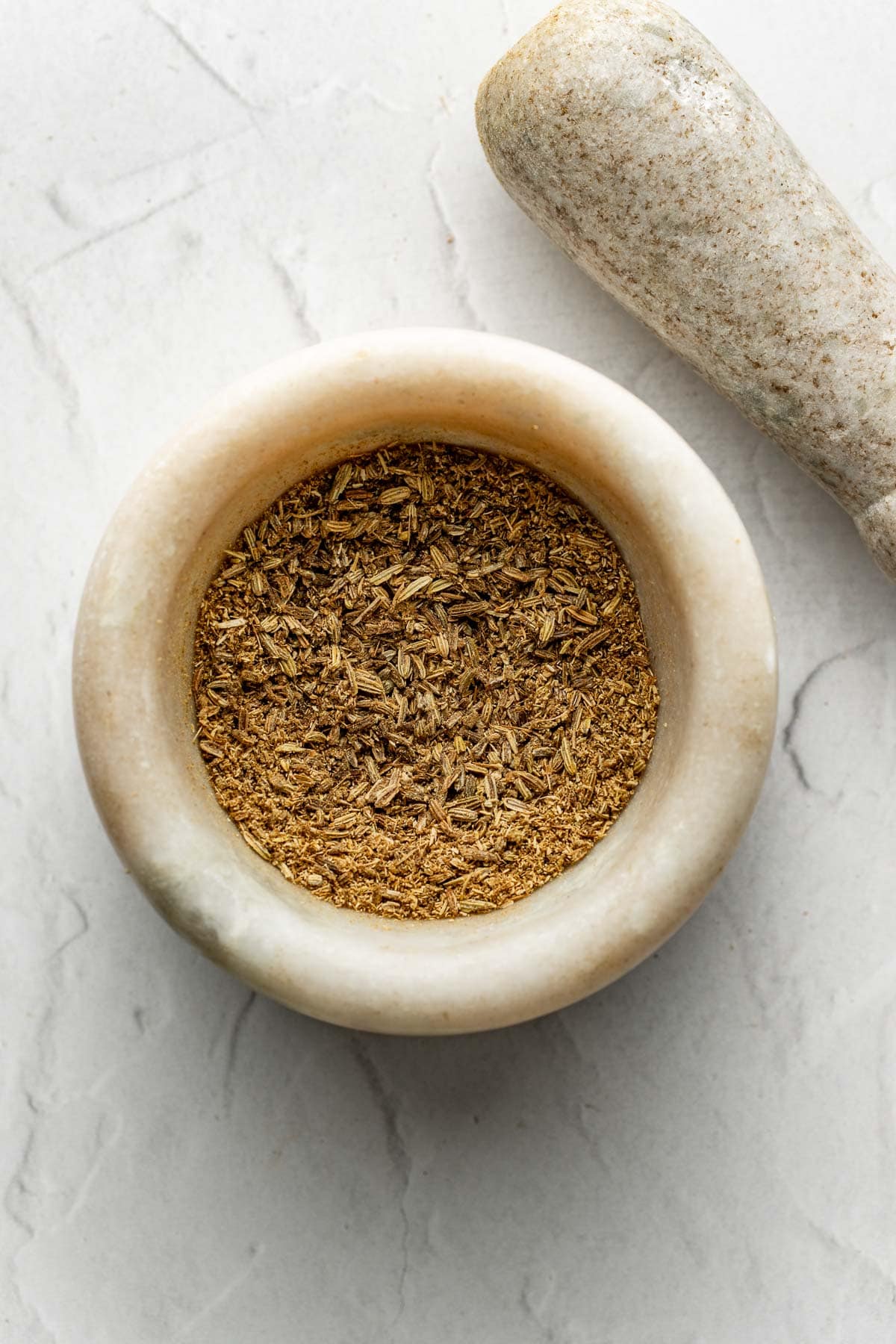
Do not underestimate the power of this paste. It adds so much flavor into the turkey breast.
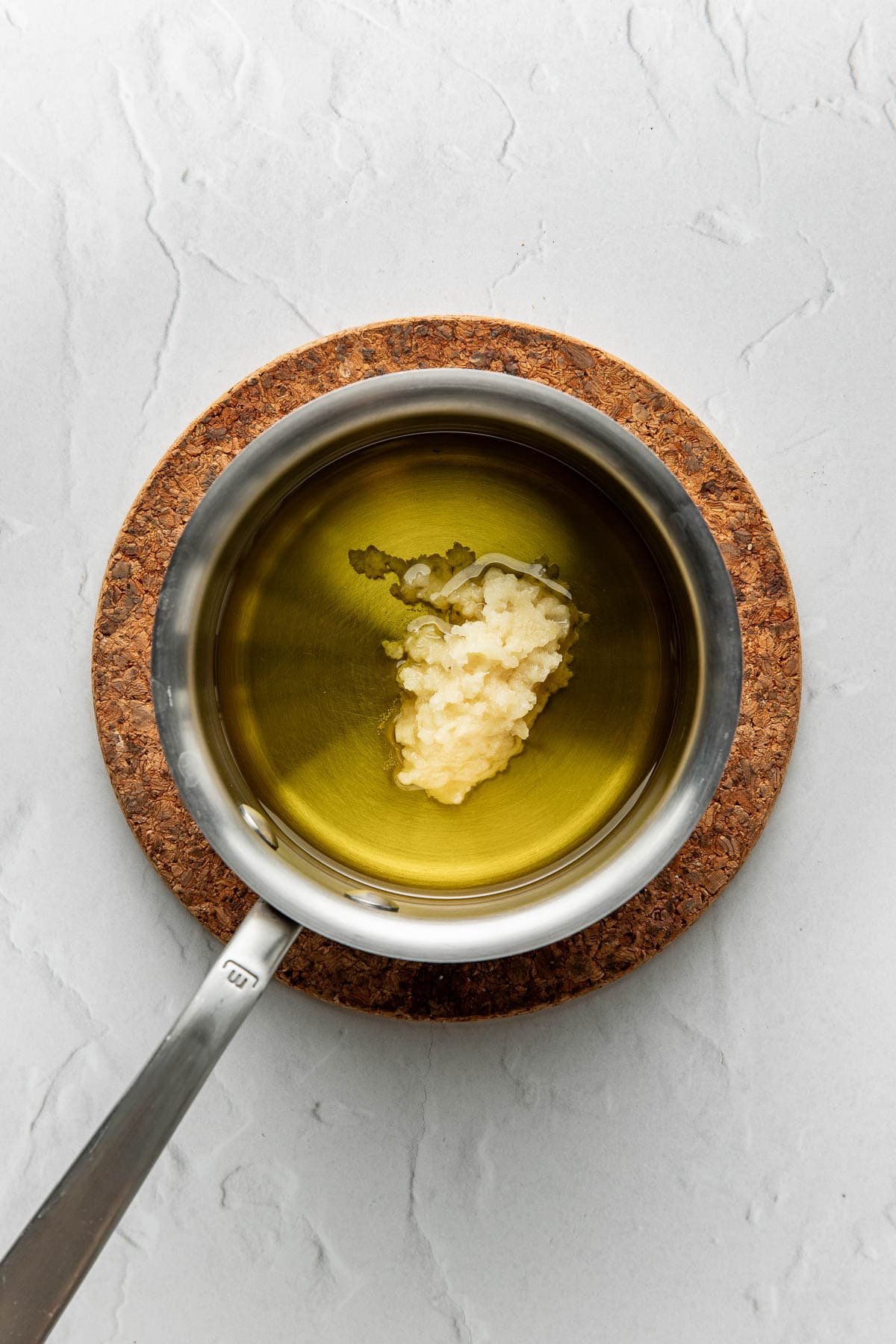
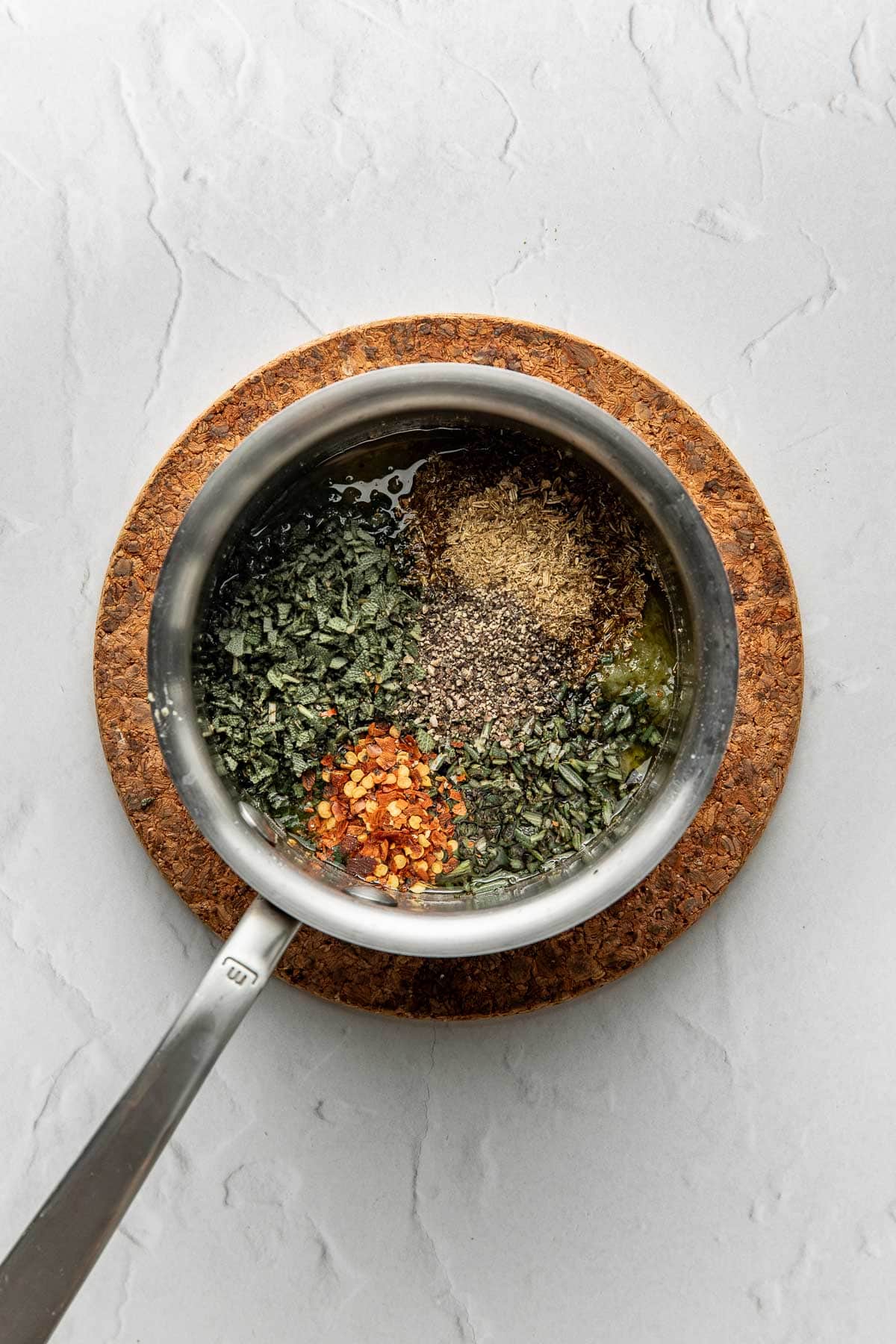
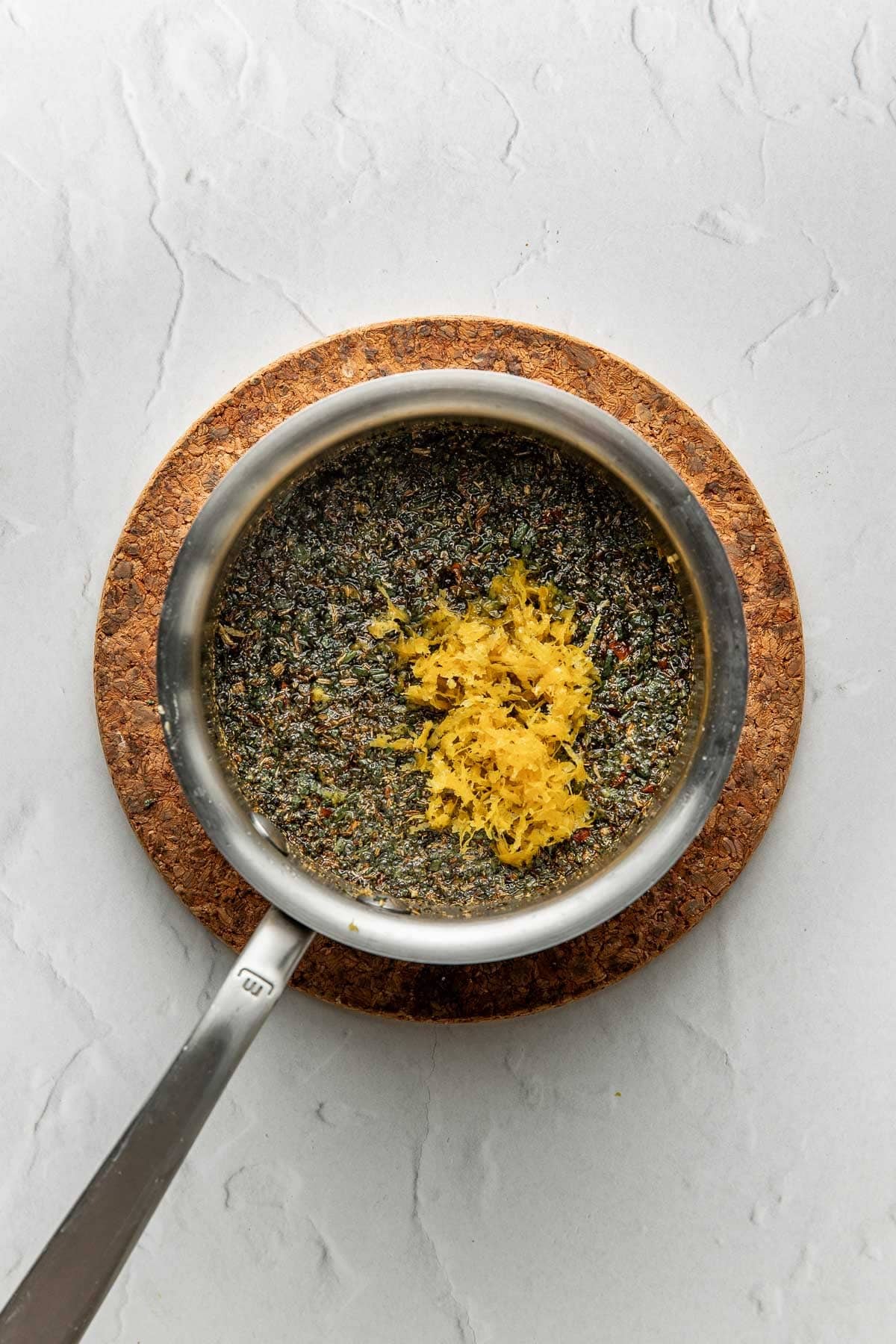
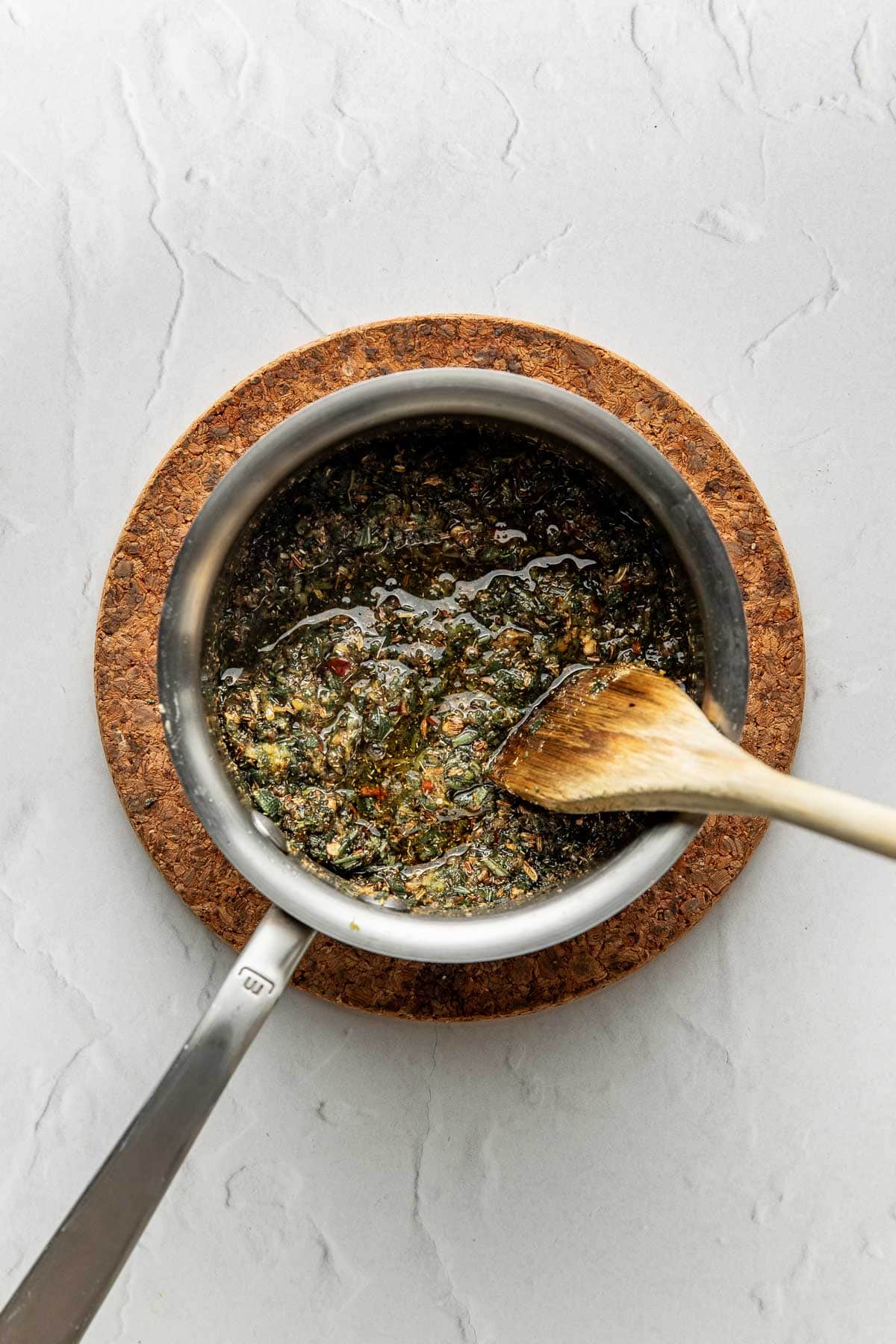
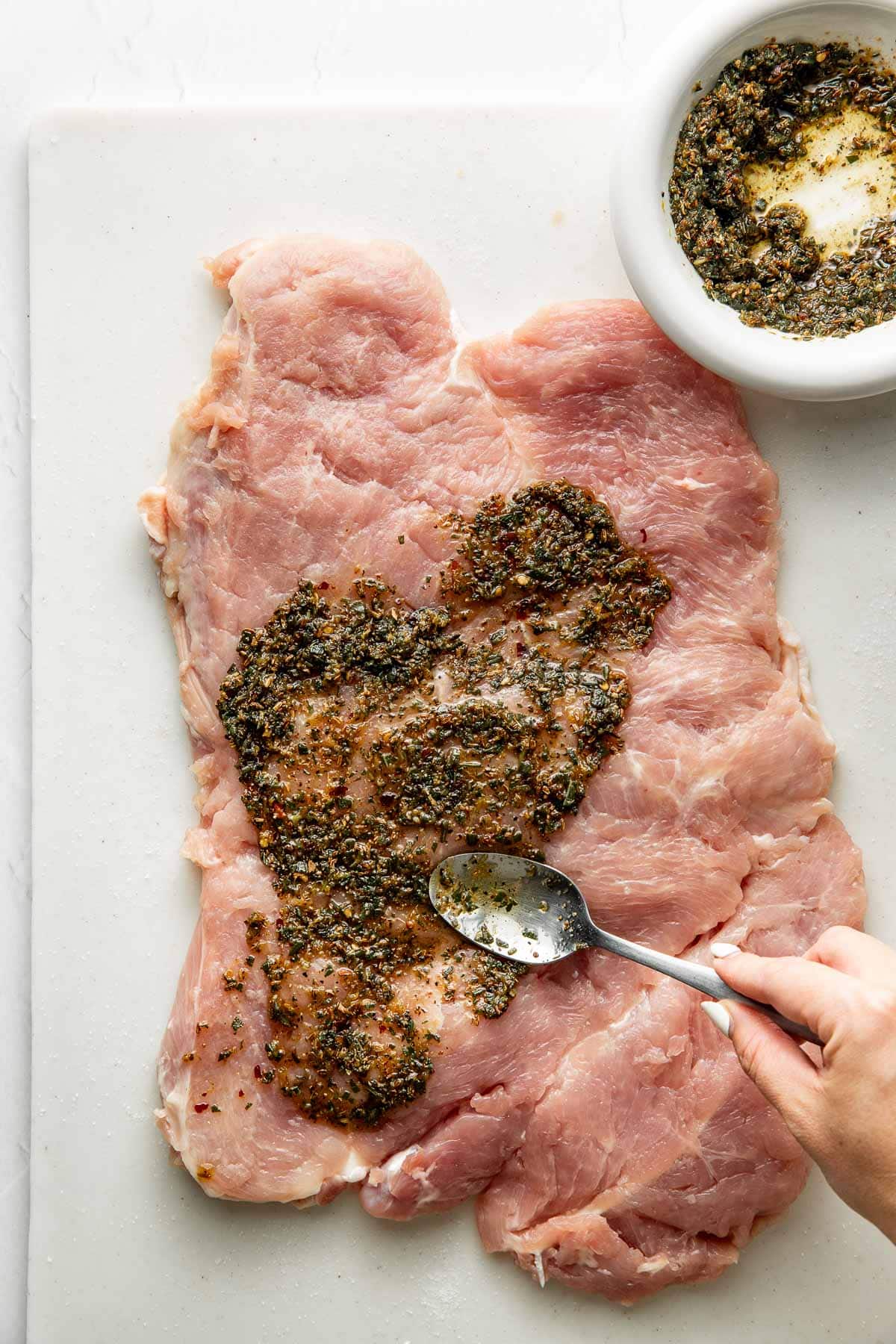
There’s no point in going all the way out to the edges. When you go to roll it, the filling will just squeeze out of the sides. I recommend leaving a ¾-inch border.
Quick note: If you can’t get thinly sliced pancetta, prosciutto works beautifully.
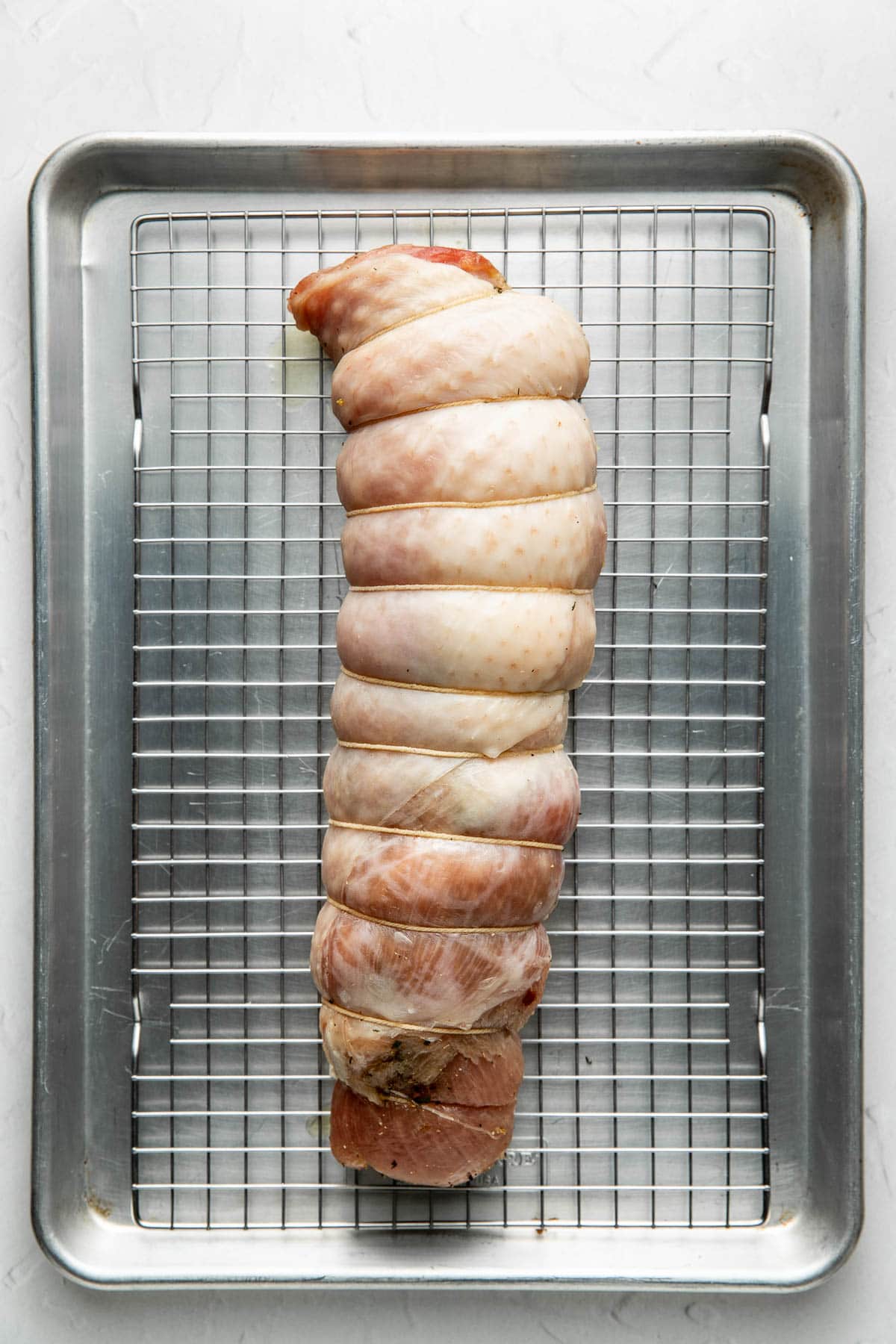
It may feel strange to leave raw poultry uncovered, but this is the secret to crackling skin. The cold, circulating air dries the skin to a parchment-like finish, so it crisps in the oven instead of steaming. Keep it on the bottom shelf, away from ready-to-eat foods.
Day 3: Roast, Rest, & Slice
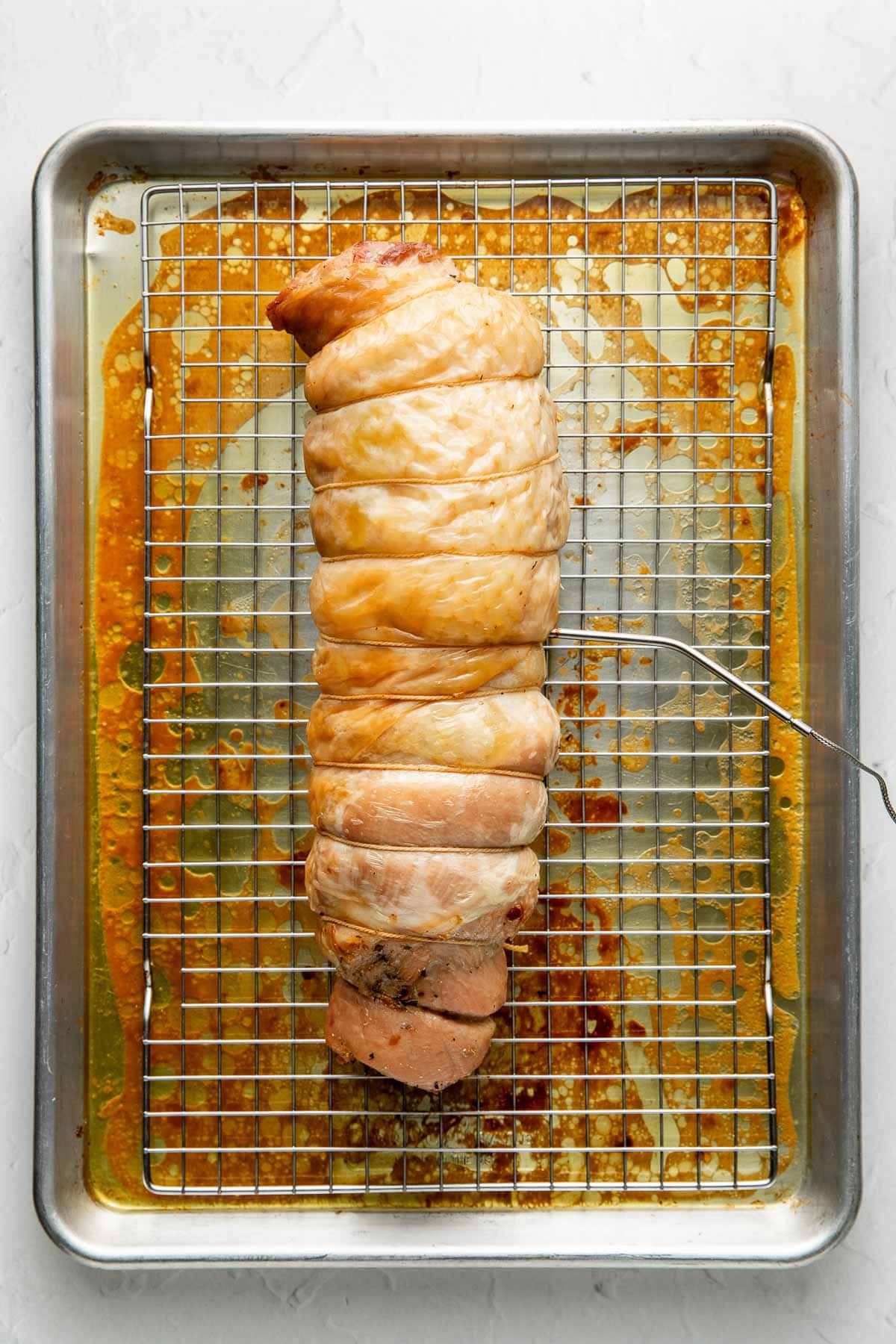
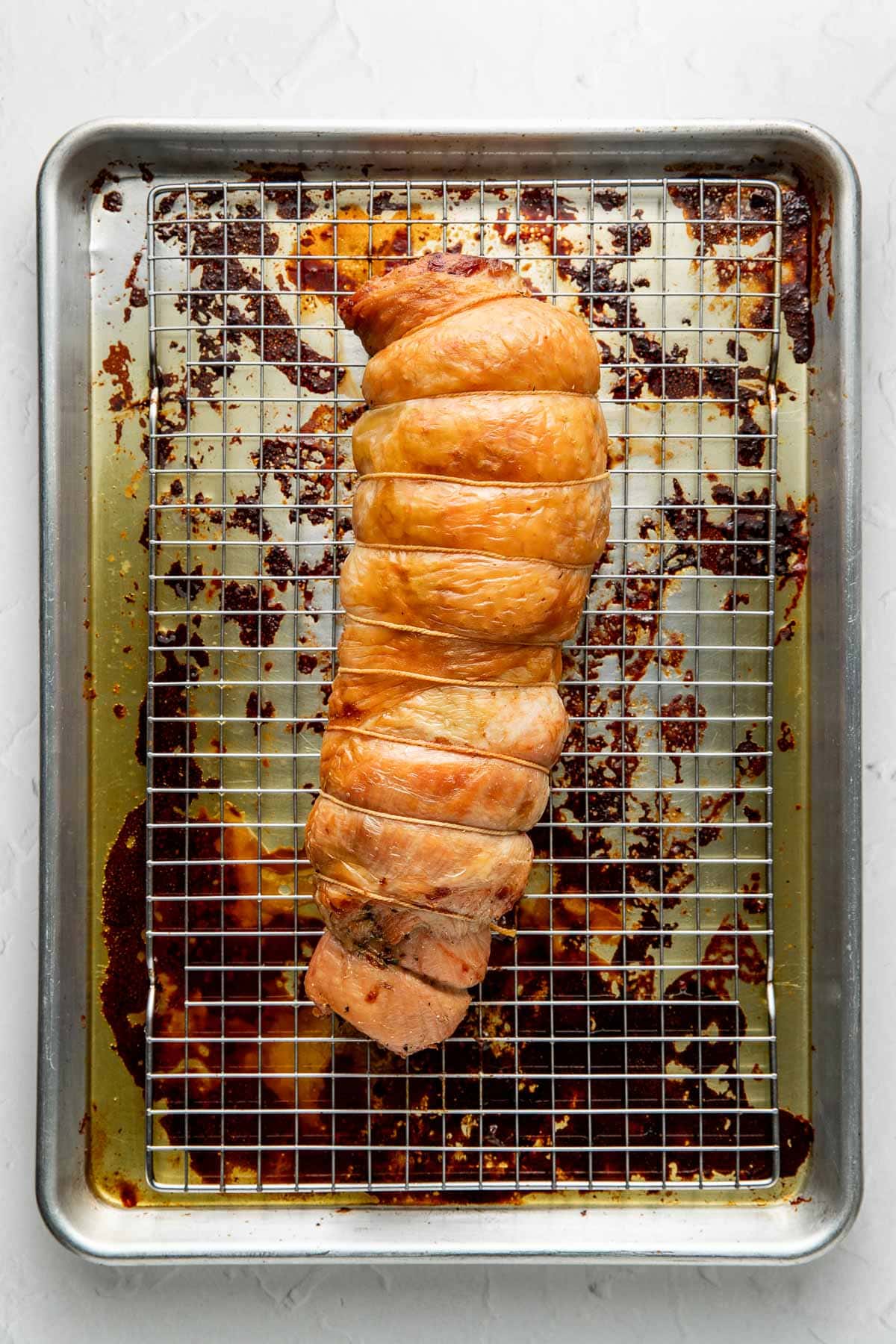
It’s the same logic as a reverse sear on a steak: gentle cooking first, a hard finish last.
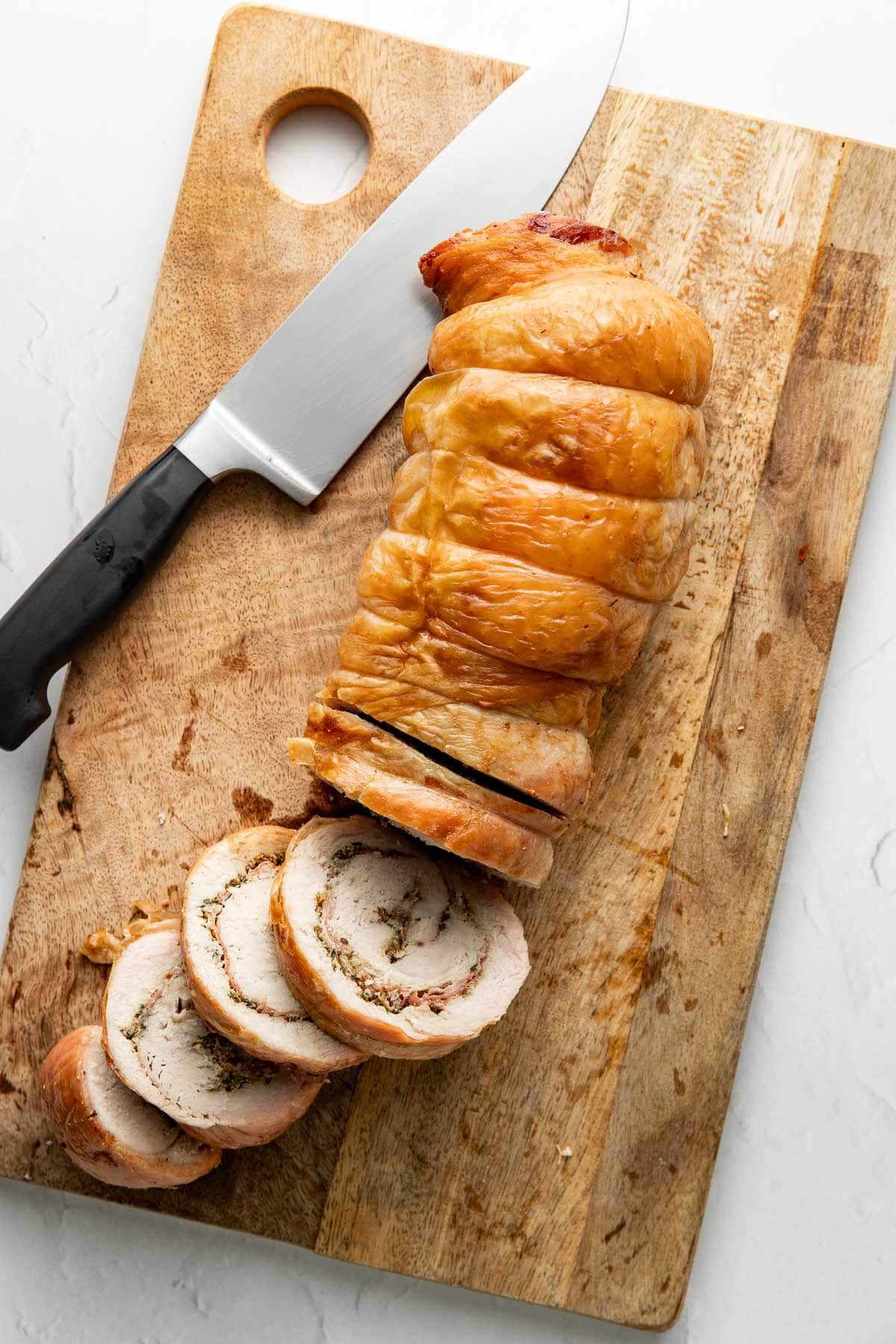
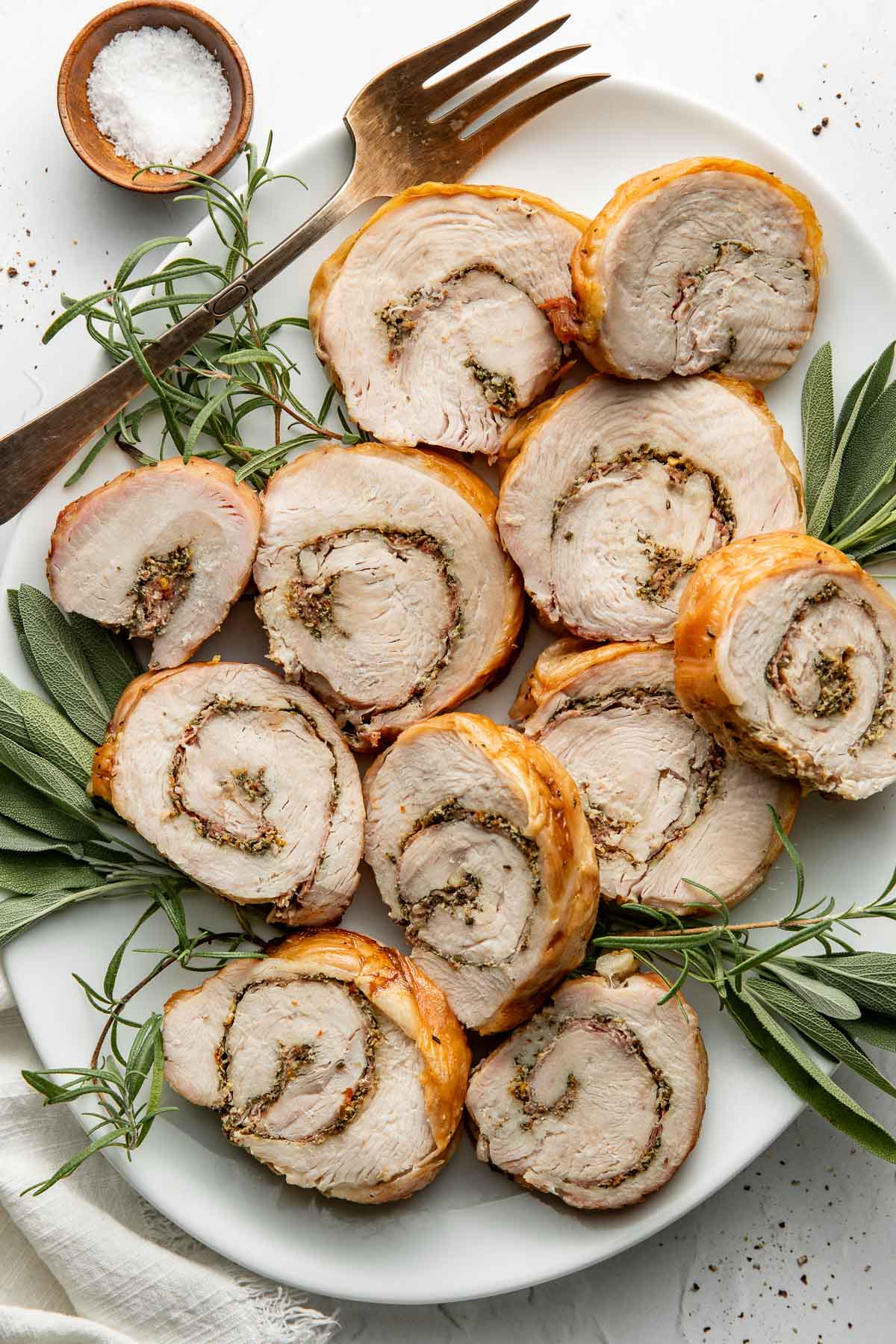
A Few Helpful Tips
- If needed, pop the turkey breast in the freezer for 20-30 minutes to help it firm up (easier to slice!).
- Use a leave-in probe thermometer. Set the alarm a few degrees below your target. This way you don’t have to keep opening the oven to check.
- Keep it on a wire rack! The air circulation while cooking is key.
- Watch the high-heat finish. Obviously, every oven runs differently. In my old oven, this took longer to finish. In our new ovens, it takes way less time. Once it’s deeply golden and blistered, it’s done.
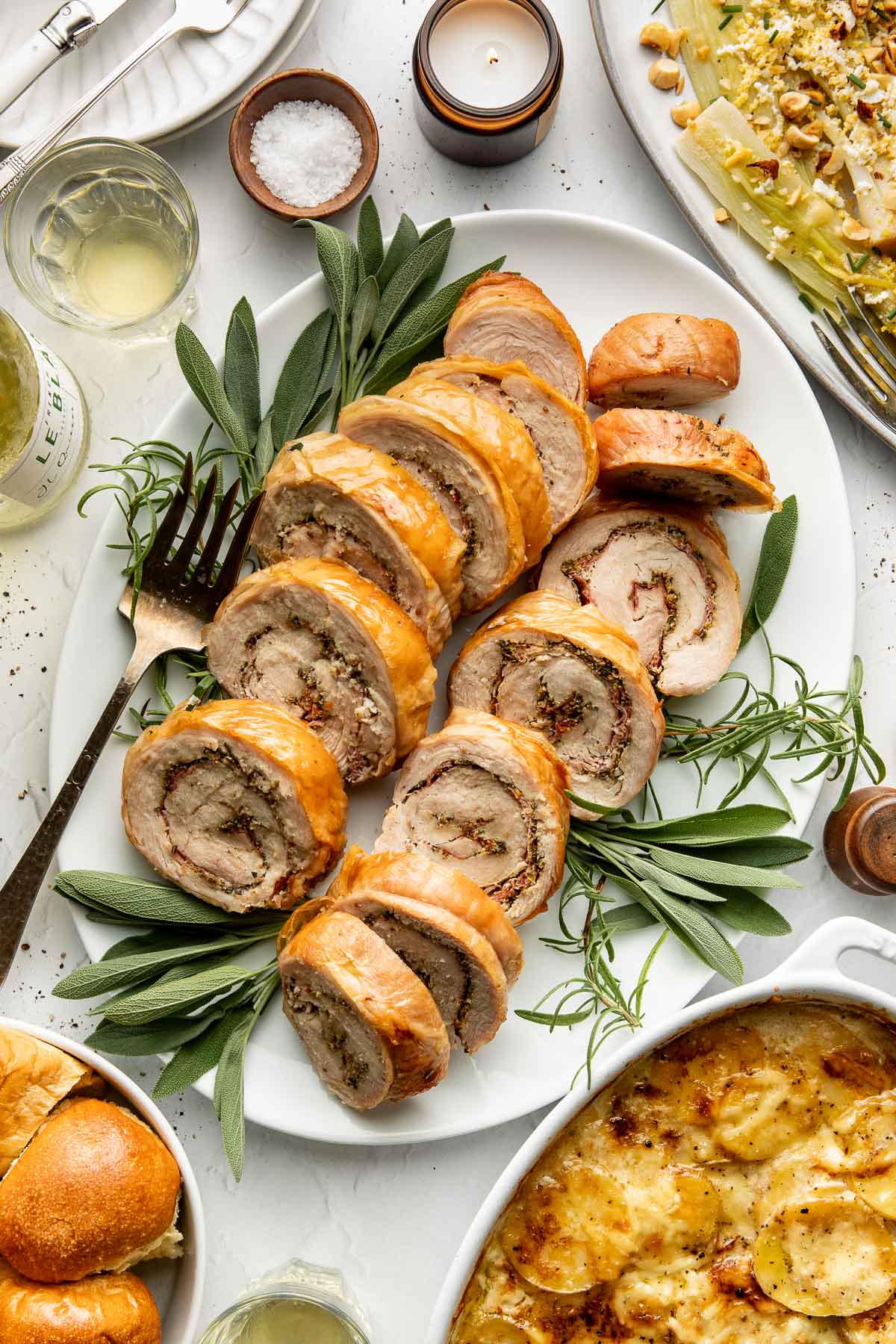
Plan Ahead: The Make-Ahead Holiday Main of Your Dreams
The best part about this recipe? Most of the work is done days before your gusts arrive. The 48-hour rest ensures this! The roulade can rest for up to 72 hours, which gives you a forgiving window to plan around.
How I’d time it for Thanksgiving:
- Monday or Tuesday: Butterfly, season, roll, and tie. Then let it do its thing in the fridge.
- Wednesday: Nothing! Focus on pies and sides.
- Thursday: Pull it out an hour before roasting. Once it’s out of the oven, it rests for 20 minutes, which is the perfect window to reheat make-ahead sides at a lower temperature.
Because it’s done in under two hours of oven time, you can roast it the day of without monopolizing the oven all afternoon.
A sauce, if you like: A spoonful of Italian salsa verde or lemony gremolata on top is never a bad idea. Even a drizzle of your best olive oil and flaky sea salt does the trick. 😉 And for dessert, keep the Italian theme going with chewy amaretti cookies.
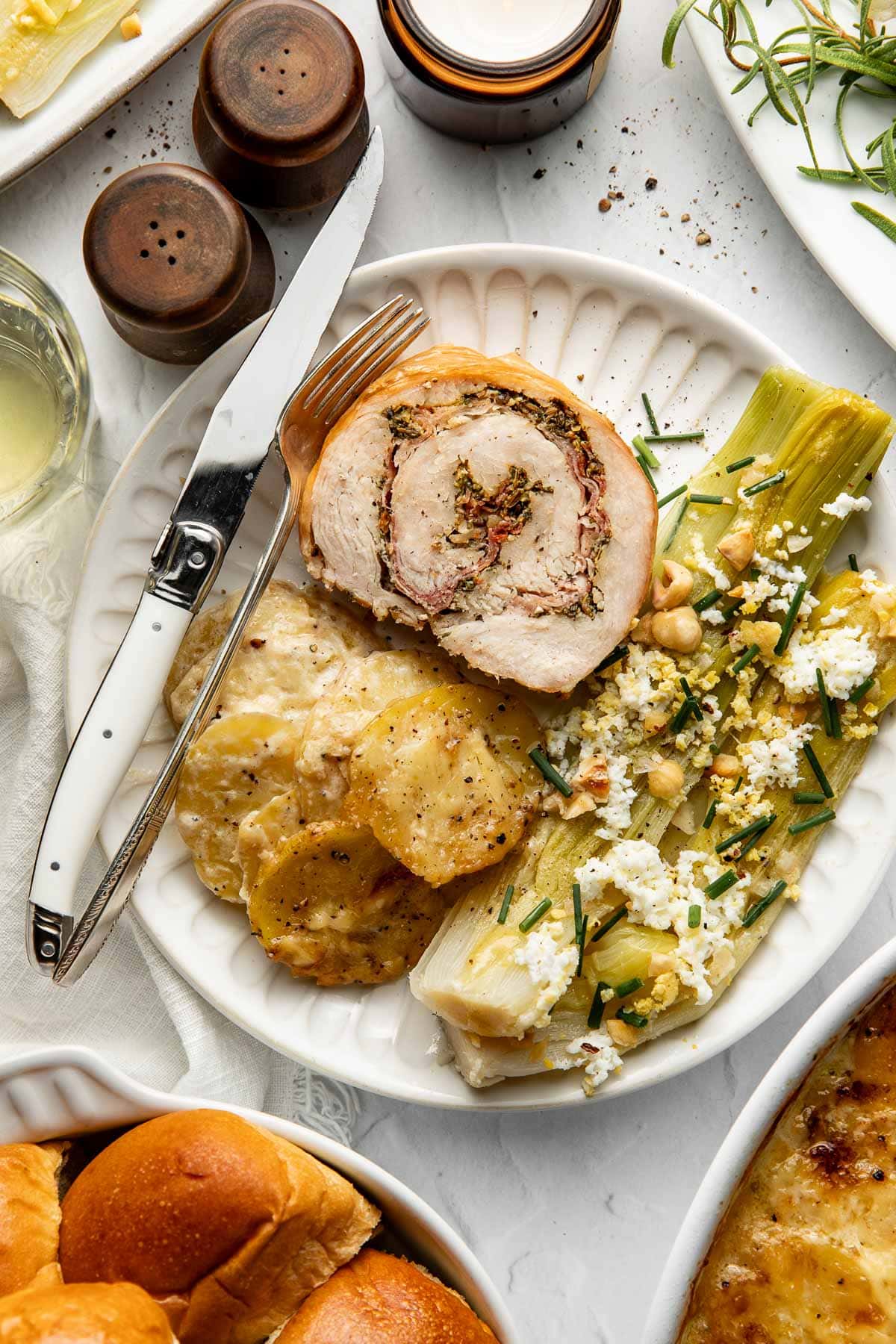
Add Leftovers To Sandwiches!
Ok, this was my favorite discovery while testing this recipe: porchetta-style sandwiches. Take slices of the cut roulade, cut them in half to be thinner, then pile them on a ciabatta roll with mayo, a handful of arugula, and sharp provolone. It was so, so good.
I love an herby green sauce, and while I didn’t have any on hand, I really do think a drizzle of Italian salsa verde (or even pesto?!) would be a fantastic addition.
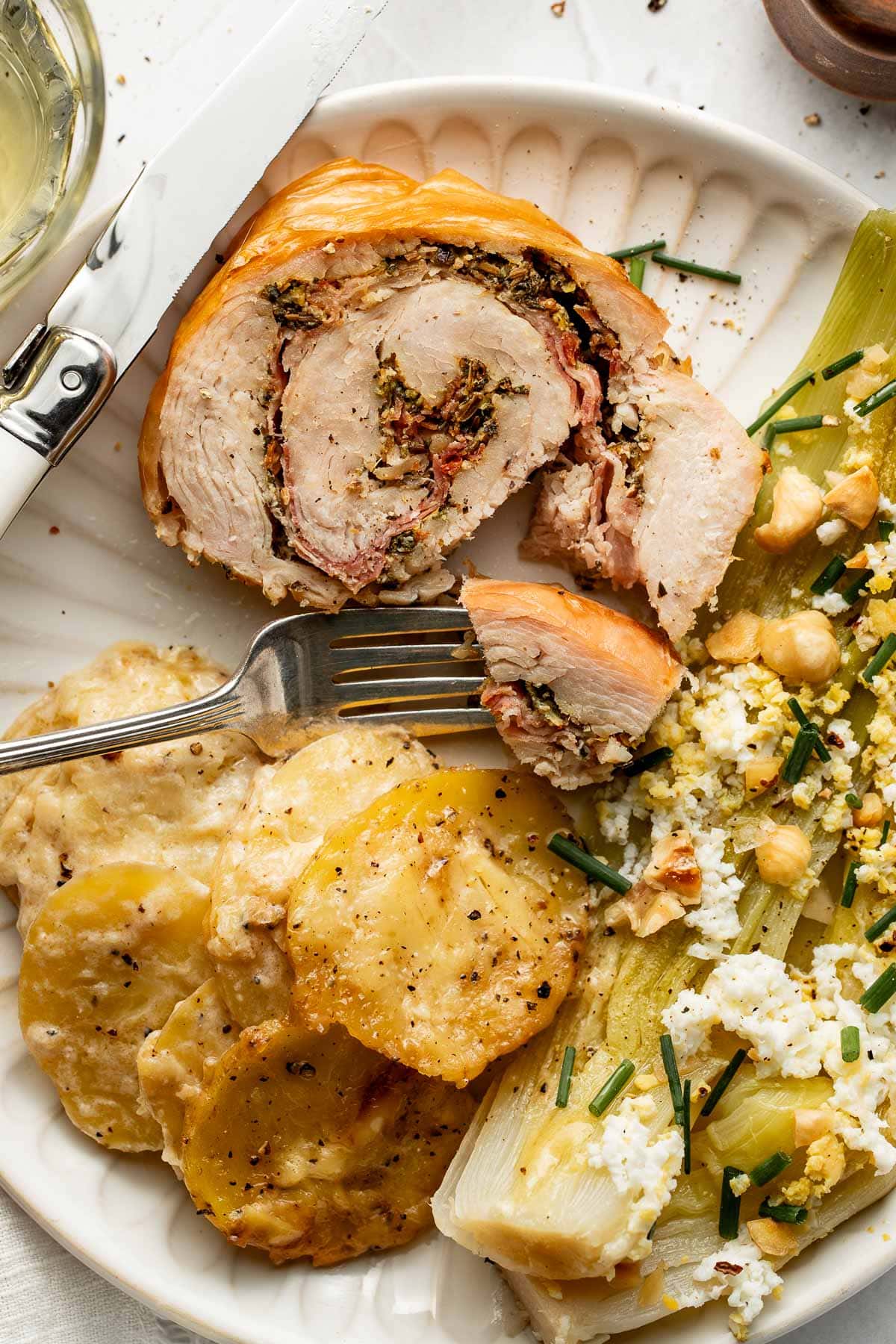
What to Serve with Turkey Roulade
This is savory and bold. I’d pair it with something creamy, something bright, and something green:

- Something rich: A creamy Comté potato gratin is my go-to. Its nutty, golden layers are made for soaking up the herby juices.
- Something elegant and green: Meltingly tender braised leeks vinaigrette is make-ahead friendly, and its gentle acidity cuts through the rich pancetta.
- Something bright: A roasted carrot salad with Castelvetrano olives leans into the Italian theme with sweet, salty, and fresh mint notes.
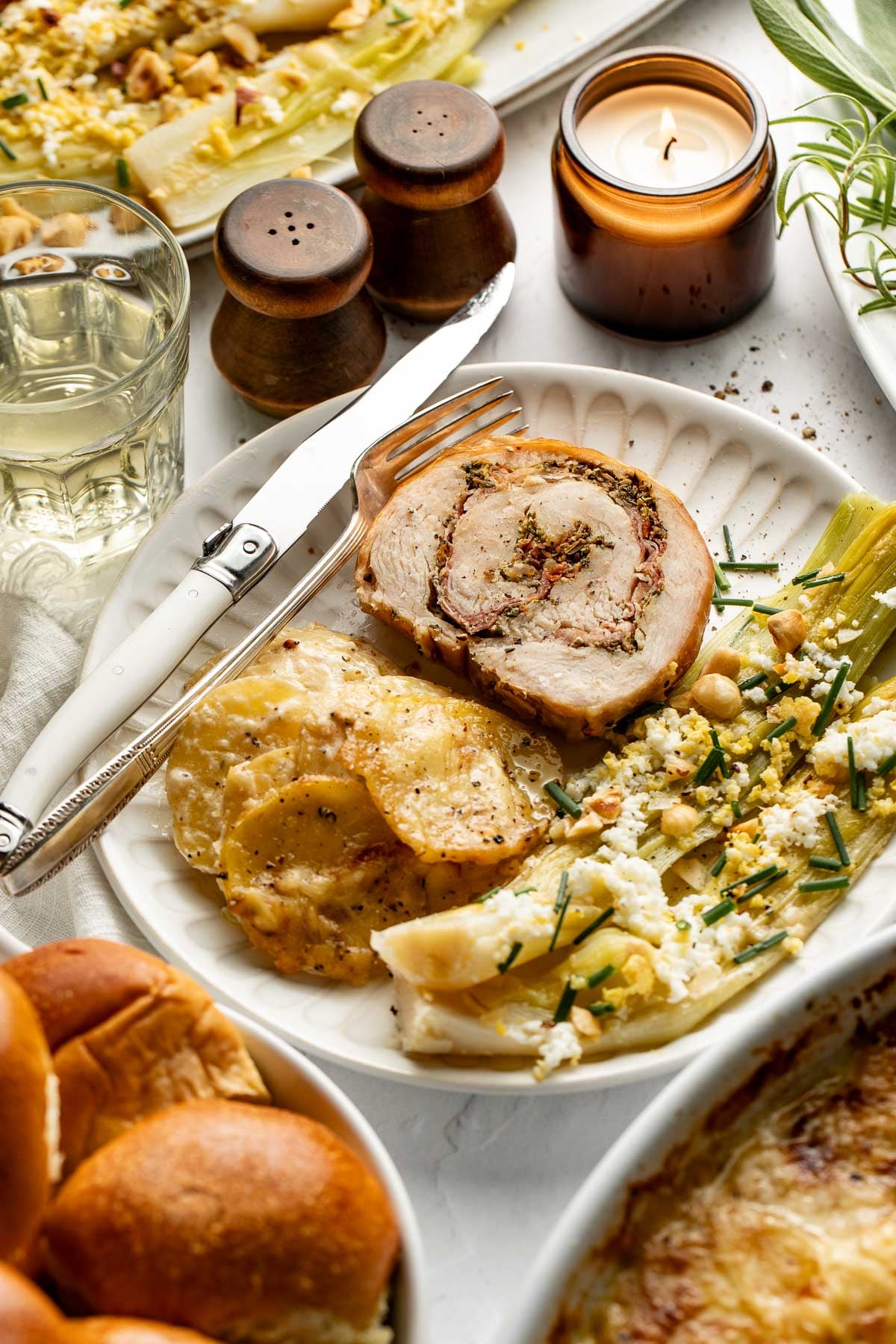
This porchetta-style turkey breast roulade is proof that turkey breast deserves a starring role. It has crackling skin, juicy slices, and a spiral of garlicky, fennel-scented herbs, and most of the work happens before the holiday even starts. If you give it a try, I’d love to hear how it turned out!
And make sure to sign up for our newsletter and follow along on Instagram, TikTok, YouTube, Pinterest, and Facebook for more Well Seasoned recipes! Don’t forget to tag us on social channels when you make a recipe at #wellseasonedstudio and upload your photos below! We love seeing what you’re up to in the kitchen!
Tell Us What You Think!
If you make this recipe, don’t forget to leave a review and rating—we value your feedback and it helps us keep creating (and sharing!) free recipes. Your support means the world!
Rate this Recipe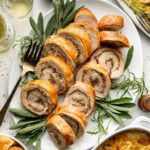
Porchetta-Style Turkey Breast Roulade (Crackling Skin!)
Equipment
Ingredients
For the Turkey
- 1 4-4½ lbs (1.8-2 kg), whole boneless skin-on turkey breast, both lobes attached
- 2 Tbsp (16g) Diamond Crystal kosher salt
- 1 tsp (4g) baking powder
For the Herb Filling
- ⅓ cup (80ml) extra-virgin olive oil
- 8 cloves garlic, finely grated on a microplane
- 2 Tbsp (12g) fennel seeds
- 2 Tbsp (5g) fresh rosemary, finely chopped
- 2 Tbsp (5g) fresh sage, finely chopped
- ½ tsp (1g) crushed red pepper flakes
- 1 tsp freshly ground black pepper
- Zest of 2 lemons, about 2 Tbsp
- 4-5 oz pancetta, very thinly sliced (this is typically where packages prosciutto and Italian meats are sold)
Instructions
Day 1: Butterfly, Season, Roll, Tie
- Butterfly the breast. Place the breast skin side down on a cutting board with the thicker edge facing you. Holding a long knife parallel to the board, cut horizontally into the thick side, stopping about ½ inch before you cut through, and open it like a book. Work slowly and check your depth often. You want an even sheet, not a hole.
- Pound to even thickness. Cover with plastic wrap and pound the thicker areas with a mallet or heavy pan until the whole sheet is a uniform ½ inch thick, roughly 12×14 inches (30×35 cm).
- Dry brine. Combine 2 Tbsp (16g) kosher salt and1 tsp (4g) baking powder. Sprinkle about ⅓ over the cut interior surface and the remaining ⅔ over the skin side, covering the skin evenly. Set the breast aside, skin side up, while you make the paste.
- Toast and grind the fennel. Toast 2 Tbsp (12g) fennel seeds in a small dry skillet over medium heat, shaking often, until fragrant and a shade darker, 2-3 minutes. Grind to a coarse powder in a spice grinder or mortar. Toasting draws out the sweet anise flavor and removes the raw edge that untoasted fennel carries.
- Bloom the paste. In a small saucepan, warm ⅓ cup (80ml) olive oil over low heat. Add the grated garlic and cook, stirring, until it smells sweet and mellow rather than sharp, 3-4 minutes. Do not let it color. Add the ground fennel, 2 Tbsp chopped rosemary, 2 Tbsp chopped sage, 1 tsp chile flakes, and 1 tsp black pepper, then cook 1 minute more. Remove from the heat and stir in the lemon zest off-heat. (This prevents it from getting bitter!) Cool to room temperature, about 10 minutes.
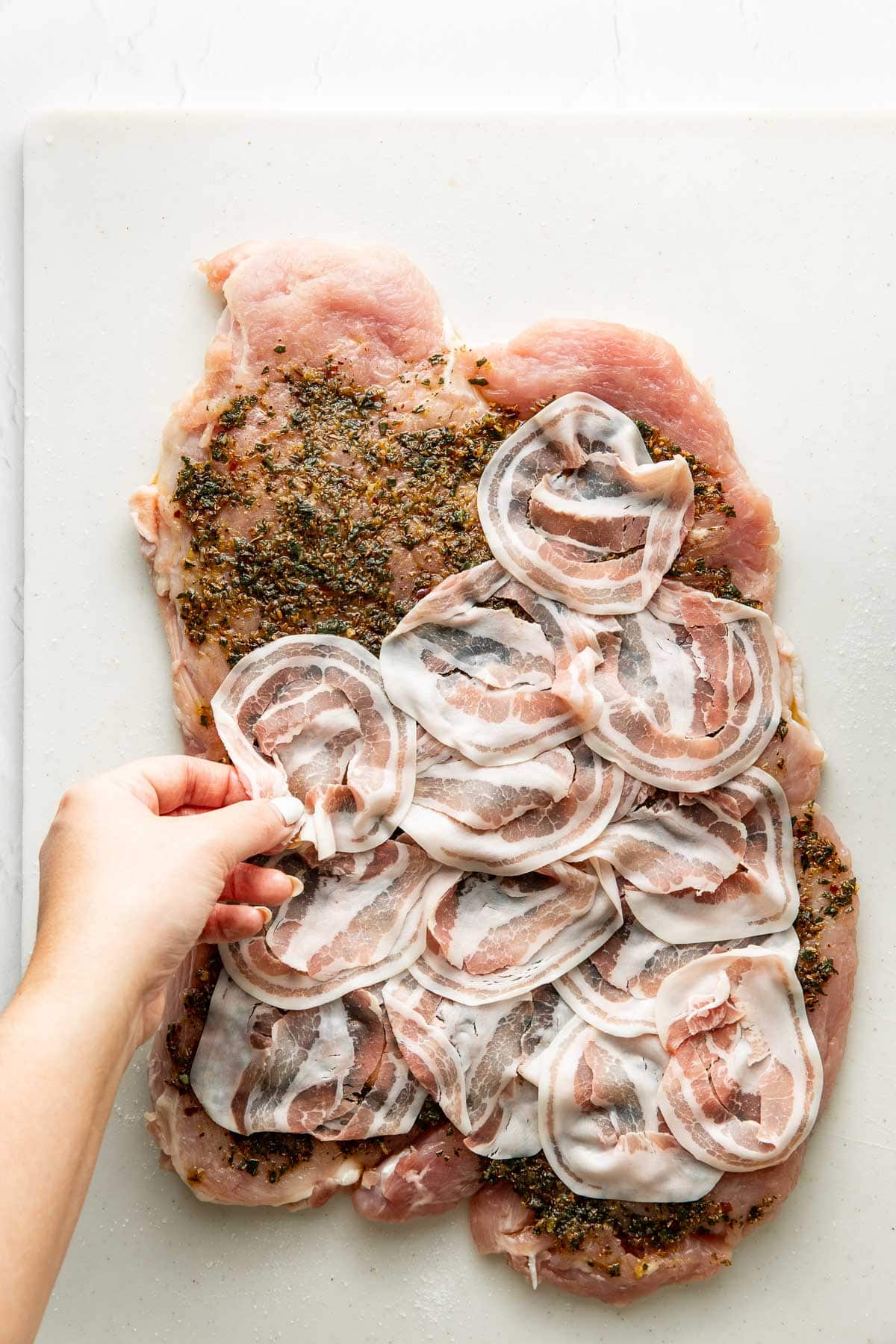
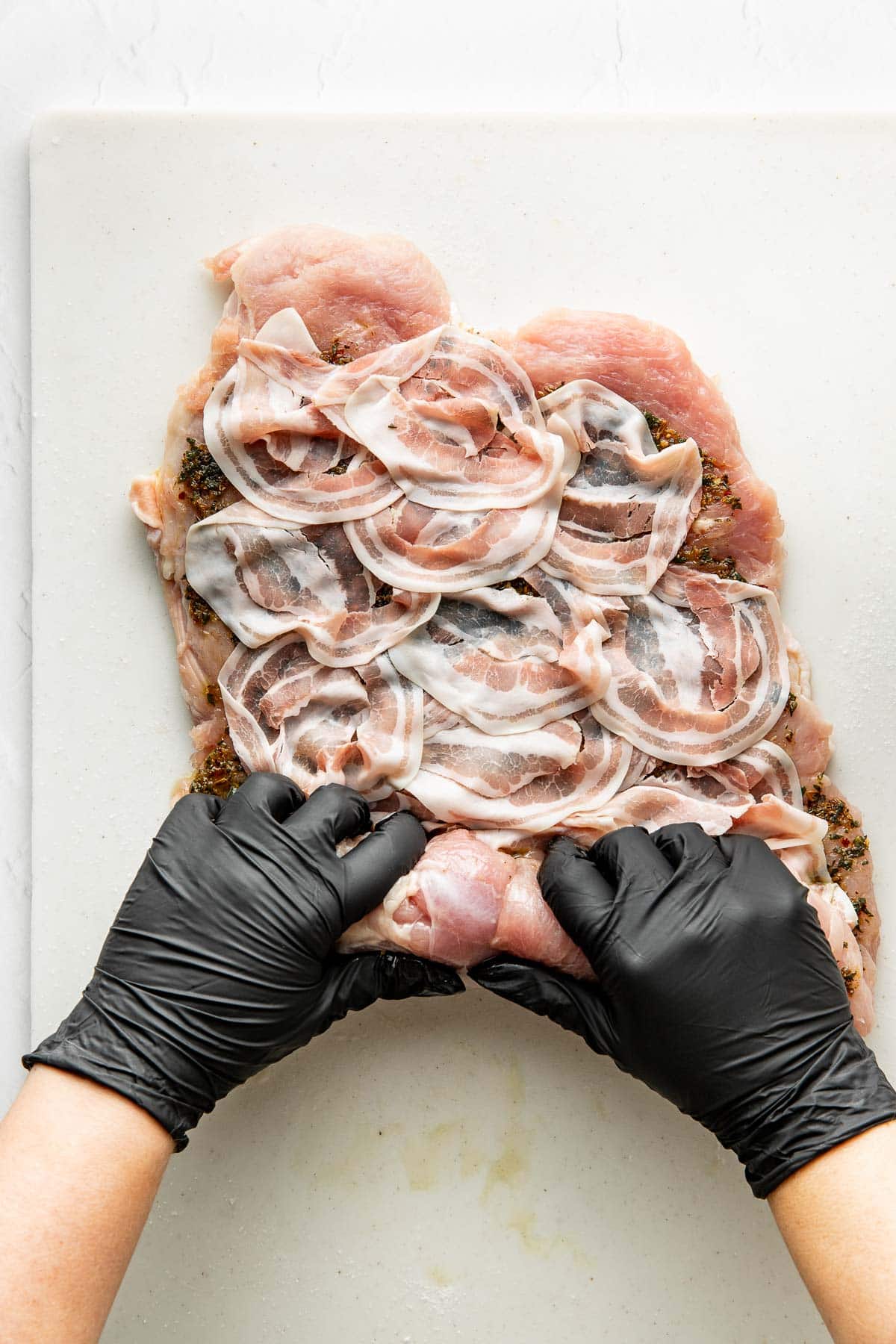
- Fill and roll. Turn the breast interior side up. Spread the cooled paste evenly across the surface, leaving a ¾-inch (2cm) border along the far long edge so it doesn’t squeeze out as you roll. Lay 4-5oz thinly sliced pancetta (or prosciutto) in a single overlapping layer over the paste. Starting from the long edge nearest you, roll the breast into a tight cylinder, keeping steady tension as you go. The tighter the roll, the cleaner the spiral slices.
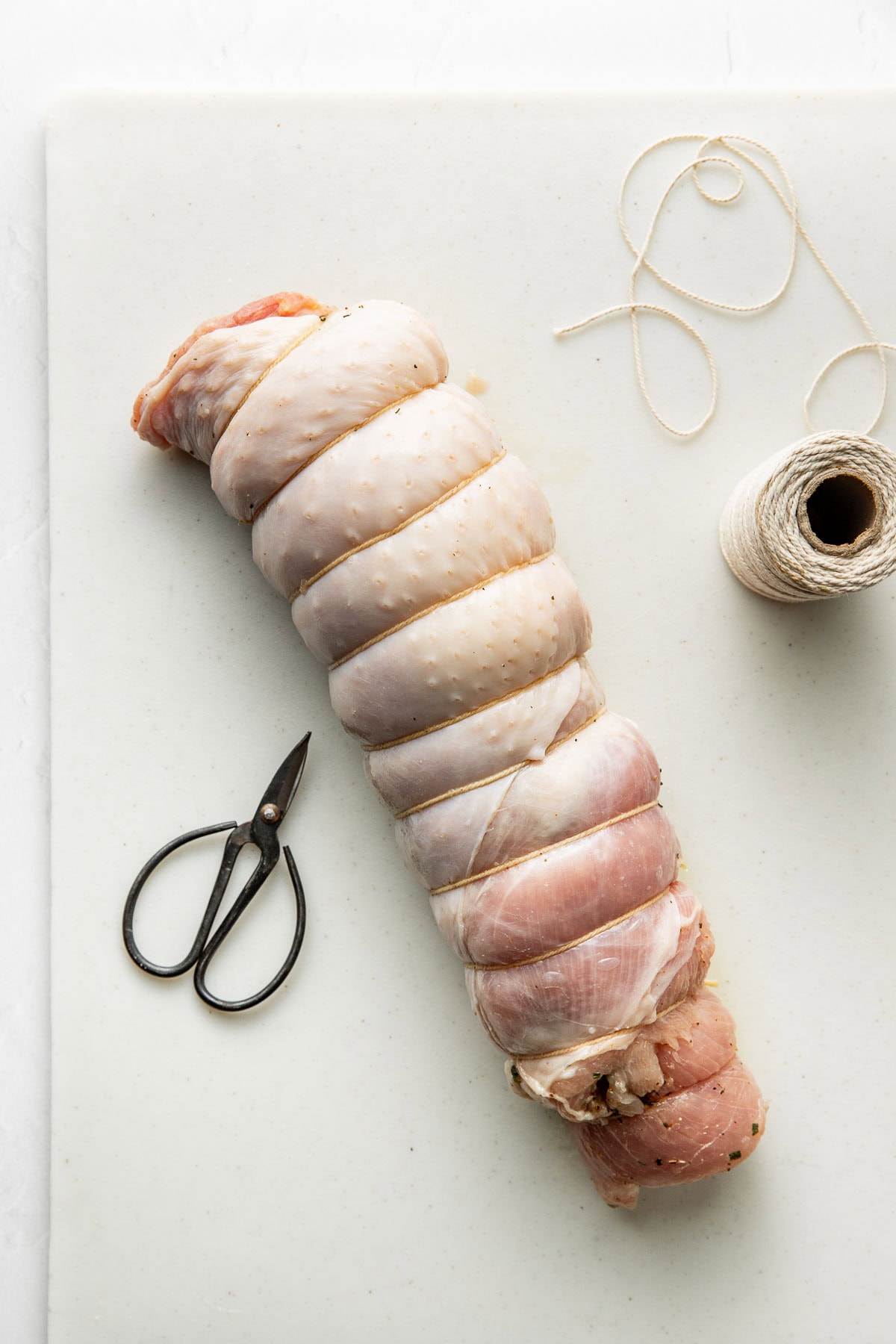
- Tie. Secure with butcher’s twine at 1-inch intervals, starting with a loop at each end and working toward the middle (see note below for detailed instructions if needed). The roulade should be an even cylinder about 12 inches long. Tuck any loose skin underneath.
- Rest uncovered. Set the tied roulade on a wire rack over a rimmed sheet pan and refrigerate uncovered for 48 hours (or up to 72 hours). This is doing two jobs at once: the salt penetrates and seasons the meat throughout, and the circulating cold air dehydrates the skin so it crisp rather than steams. Do not cover it—we want to dry out the skin.
Day 3: Roast
- Temper. Pull the roulade from the refrigerator 1 hour before roasting and leave it on the counter, still on its rack. Heat the oven to 325°F (165°C) with a rack in the lower third.
- Roast low. Roast until an instant-read thermometer inserted into the center of the roll registers 150°F (66°C), about 75-100 minutes. Start checking at the 1 hour 10 minute mark. Check in two or three spots, as the spiral makes for uneven pockets, and you want the coolest reading.
- Crank and crisp. Raise the oven to 475°F (245°C) and roast 10 minutes more, or until the skin is deep golden and crackling and the center reads 155-157°F (68-69°C). Watch it closely at this stage; it goes from beautifully bronzed to burnt quickly.
- Rest. Transfer to a cutting board and rest for 20 minutes, uncovered. Carryover will carry the center to 160-165°F (71-74°C). Tenting with foil will soften the skin, so leave it alone.
- Slice. Snip and remove all twine. Slice into ¾-inch (2cm) rounds with a sharp carving knife, using a smooth drawing motion rather than pressing down, which compresses the spiral.
Notes
- Turkey sourcing: Ask the butcher for a whole double-lobe breast, boned but with the skin left intact and attached. Supermarket “turkey breast roasts” are often netted, pre-tied, and skinless. It will work, but you won’t have any crispy skin (a real loss!).
- The baking powder raises the pH of the skin, which speeds browning and gives you a crisper, more evenly colored result after the long uncovered rest.
- On timing: A 24 hour uncovered rest still produces good results. Under 12 hours, the skin won’t have dried enough to crisp properly, and you’re better off roasting it the same day and accepting softer skin.
- How to tie: Slide a piece of twine under one end of the roll, and tie a secure slip knot. Pull the twine down one inch, loop it around the meat, and tuck it under itself. Repeat this looping pattern every inch until you reach the opposite end. Tie off the final loop with a double knot and trim the excess string.
- Storage: Refrigerate leftovers for up to 4 days, or freeze slices for up to 3 months (the skin softens once frozen).
- Reheating: Warm slices on a rack in a 325°F (165°F) oven until just heated through.
Nutrition
Photography by Megan McKeehan.


Let us know your thoughts!